
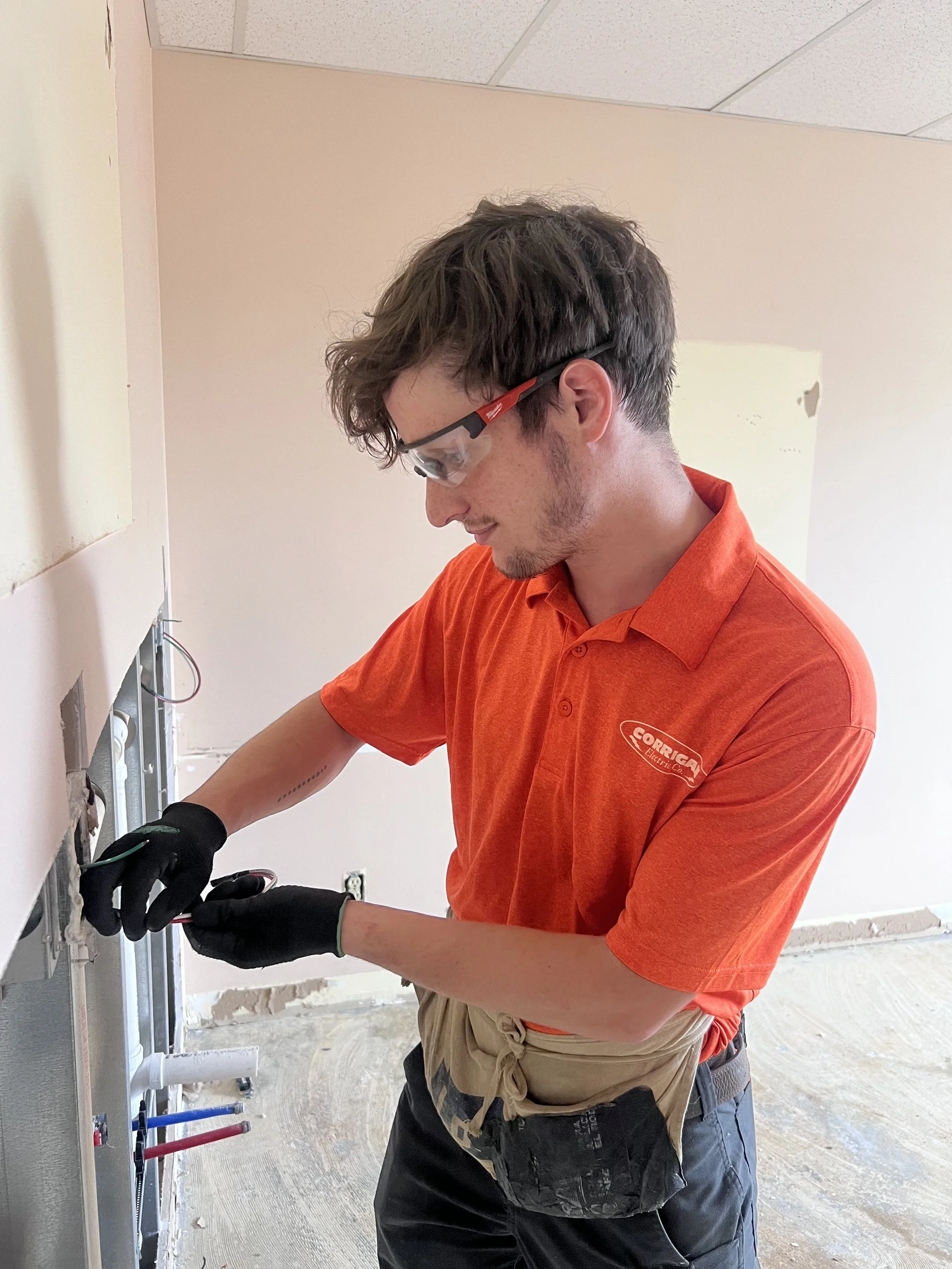
In a world where “how-to” videos are just a click away, it’s tempting to tackle home projects on your own. While painting a wall or fixing a leaky faucet might be reasonable DIY tasks, electrical repairs are a different story. At Corrigan Electric, we’ve seen the risks and consequences of unlicensed electrical work, and we want homeowners across Kentucky and Southern Indiana to understand why it’s not worth the gamble.
Electricity Is Unforgiving
Unlike many home systems, electrical problems can be hidden until it’s too late. A miswired outlet, overloaded circuit, or ungrounded connection can lead to serious risks:
Electric shock
Fire hazards
System failures
Voided insurance policies
Even a small mistake, like mixing up a neutral and ground wire, can cause major issues down the line.
The Risks of DIY Electrical Work
1. Safety Hazards
The most obvious risk is personal injury. Electrocution and arc flash burns are real dangers. It’s not just about flipping a breaker, many systems stay live even when partially powered down.
2. Code Violations
Electrical codes exist for a reason: to keep homes safe. DIY work often fails inspection or overlooks important requirements like GFCI placement, wire gauge, or breaker sizing. Even if everything "works," it might not be safe, or legal.
3. Future Resale Issues
Unpermitted work or visible DIY fixes can cause problems when you sell your home. Inspectors look for code violations and red flags, which can lead to costly repairs or lost deals.
4. Improper Load Management
Adding new outlets, lights, or appliances affects your system’s load balance. Without a licensed electrician’s assessment, you may overload circuits and risk panel failure.
5. Void Manufacturer Warranties
Installing certain products, like EV chargers, generators, or lighting control systems, without a certified electrician may void warranties and leave you unprotected.
What Homeowners Often Try (and Shouldn’t)
Replacing outlets or switches without checking for proper grounding
Installing new light fixtures on circuits that aren’t rated for the load
Running extension cords as permanent wiring to sheds or garages
Adding breakers without calculating panel capacity
Splicing wires without proper junction boxes or enclosures
These shortcuts may seem harmless, but they’re not.
What Makes Corrigan Electric Different
Every job we do includes a licensed electrician on-site. We’ve been in business since 1995, and our team doesn’t just meet code, we train beyond it. Our internal Career Academy emphasizes safety, code compliance, and professionalism across every project.
We’re also certified by leading manufacturers like Generac, Briggs & Stratton, Eaton, and Lutron, so our installations protect your investment and qualify for full warranties.
What You Can (and Should) Call Us For
Outlet or switch issues
Circuit breakers that trip repeatedly
Outdoor power needs
Generator installation and service
Lighting upgrades
Panel inspections and upgrades
Electrical needs during remodels or additions
No job is too small if it involves electricity. If you’re not licensed and insured, it’s not a DIY project.
A Safer Home Starts with a Pro
We understand the appeal of doing it yourself. But when it comes to electricity, it’s not worth the risk. Let our licensed professionals do the job right, protecting your home, your family, and your peace of mind.
You Know Us at Corrigan, Give Us a Call. Your Electrician.
FAQs
Q: What’s the biggest risk of DIY electrical repairs?
A: Electric shock and fire hazards are the most serious concerns. Mistakes may not be obvious but can lead to long-term damage.
Q: Can I replace a light fixture or ceiling fan myself?
A: Not safely unless you understand the load, box rating, and grounding. We recommend calling Corrigan for any fixture changes.
Q: Is unlicensed work legal if I own the home?
A: In most municipalities, significant electrical work still requires permits and inspections, even for homeowners. Corrigan ensures everything is up to code.