
Can I Install an EV Charger at Home?
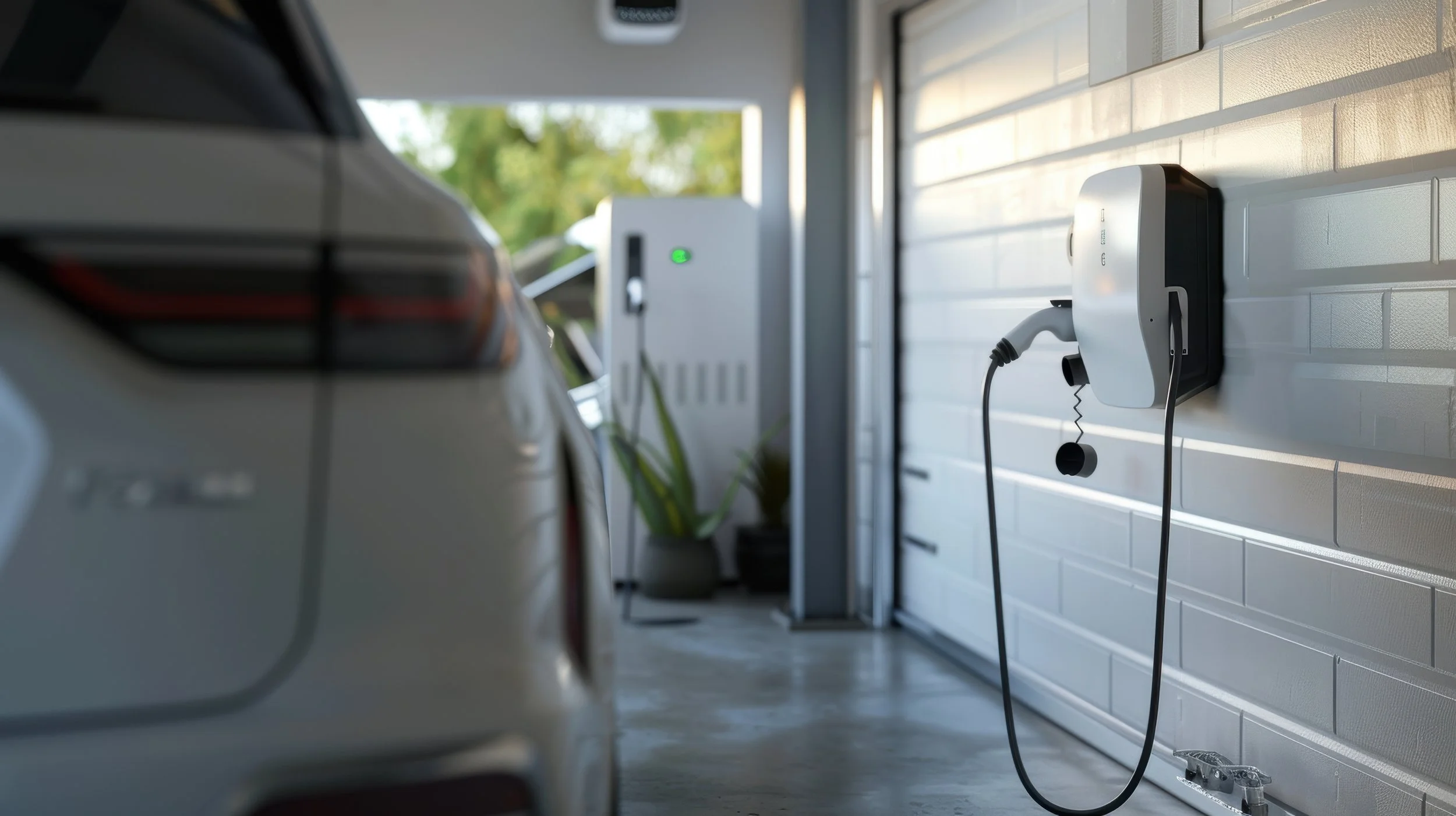
Yes, most homes can support an EV charger, and for everyday charging, a professionally installed Level 2 charger is usually the best fit. Whether your home is ready comes down to a few things: the capacity of your electrical panel, where you want the charger, and the wiring run needed to reach it. Many homes are ready with a straightforward installation. Others need a new dedicated circuit or a panel upgrade first. The most reliable way to know is to have a licensed electrician look at your setup and tell you exactly what it will take.
Schedule an EV charger assessment. Visit corriganelectric.com or call 502-267-4600.
What are the levels of home EV charging?
There are three levels of EV charging, and the difference is mostly about speed. The right one depends on how far you drive and how quickly you want to recharge.
Level 1 uses a standard 120-volt household outlet. It is the slowest option and often adds only a few miles of range per hour, which works for light drivers but not most daily commuters.
Level 2 uses a 240-volt circuit, similar to what an electric dryer or range uses. It charges far faster and is the most common choice for home installation.
Level 3, or DC fast charging, is commercial-grade equipment used at public stations. It is not installed in homes.
For most homeowners, a Level 2 charger on a dedicated circuit is the practical answer.
Does my electrical panel need an upgrade for an EV charger?
Sometimes, and it depends on how much spare capacity your panel has. An EV charger adds a significant, steady load to your electrical system, so your panel needs room to handle it safely alongside everything else in your home.
If your panel is newer and has open capacity, a licensed electrician may be able to add a dedicated circuit without major changes.
If your panel is older, already full, or undersized for today’s power use, it may need an upgrade first.
Homes with existing high-demand equipment, like electric heat or a hot tub, are more likely to need added capacity.
An assessment answers this before any equipment is ordered, so there are no surprises.
Why not install an EV charger yourself?
Because an EV charger is a high-load, 240-volt installation that ties directly into your home’s electrical panel, and getting it wrong carries real safety and code consequences. A charger draws heavy current for hours at a time, so the circuit, wiring, and connections all have to be sized and installed correctly.
Improper installation can lead to overheating, tripped breakers, damage to the charger or your vehicle, and code violations that can affect insurance or a future home sale. Permits and inspections are also required in most areas. A licensed electrician handles the load calculation, the dedicated circuit, the mounting, and the permitting so the whole system is safe and compliant.
How does professional EV charger installation work at Corrigan Electric?
At Corrigan Electric, installation starts with an assessment of your panel and the charging location, then moves to a clean, code-compliant install by a licensed electrician. We look at your panel capacity, plan the circuit and wiring run, and confirm what your home needs before any work begins.
We evaluate your panel and recommend an upgrade only if it is genuinely needed.
We install a dedicated 240-volt circuit for the charger.
We mount and connect the charger in your garage, carport, or driveway location.
We handle permitting and make sure the installation meets code.
Every job includes a licensed electrician on site, and our pricing is honest, with no commission-based upsells.
What types of EV chargers and setups can be installed?
Most residential charging setups can be installed, whether you already own a charger or need help choosing one. The right configuration depends on your vehicle, your garage layout, and your daily driving.
Hardwired Level 2 chargers for a permanent, weatherproof install
Plug-in Level 2 chargers on a dedicated 240-volt outlet
Chargers for garages, carports, and exterior driveway locations
Setups planned for a second future vehicle
If you are not sure which charger to buy, a licensed electrician can help you match one to your home.
Can an EV charger be paired with other electrical upgrades?
Yes, and it is often a smart time to handle related work at once. Because installing a charger already involves your panel and a new circuit, it can pair naturally with other improvements.
Many homeowners add whole-home surge protection to help protect their electronics, upgrade an older panel while capacity is being added, or plan a dedicated circuit for another high-demand area. Combining projects can save time and reduce repeat visits.
Can businesses install EV charging stations?
Yes, and more employers, retailers, and property managers are adding them. Commercial EV charging supports employees, customers, and tenants, and it can add long-term value to a property.
Corrigan Electric installs and services commercial electrical systems across Kentucky and Southern Indiana, including added-capacity work and charging infrastructure, with licensed electricians managing the installation and code compliance.
EV Charger Installation in Kentucky and Southern Indiana
Corrigan Electric installs home and commercial EV chargers across Kentucky and Southern Indiana. Family owned and operated since 1995, we put a licensed electrician on every job, price honestly without commission-based tactics, and stand behind our work.
Level 2 home charger installation and dedicated circuits
Panel evaluations and upgrades to support charging
Commercial and workplace charging setups
Permitting and code-compliant installation
You can reach our office Monday through Friday, 7:30 AM to 5:00 PM at 502-267-4600, or schedule online anytime at corriganelectric.com.
What happens if you skip the assessment or use an unlicensed installer?
You risk an unsafe installation, nuisance breaker trips, and code problems that can be costly to fix later. An EV charger is only as safe as the circuit and panel behind it, so skipping the load calculation or using unlicensed work can overload your system or create a fire risk.
Done right, a home charger is convenient and dependable for years. The assessment is what makes sure your home can support it safely from day one.
Frequently Asked Questions
How long does it take to install a home EV charger?
Many standard installations can be completed in a few hours, though it varies. If your panel needs an upgrade or the charger is far from the panel, the job can take longer. A licensed electrician can give you a clear timeline after the assessment.
Do I need a permit to install an EV charger at home?
In most areas, yes. EV charger installations typically require a permit and an inspection because they add a high-load circuit to your home. Corrigan Electric handles the permitting as part of the installation.
Can I use a regular outlet to charge my EV?
You can use a standard outlet for Level 1 charging, but it is slow and often not practical for daily driving. Most homeowners choose a Level 2 charger on a dedicated 240-volt circuit for faster, more reliable charging.
How do I know if my panel can handle a charger?
The only sure way is a load evaluation by a licensed electrician. They will check your panel’s capacity and existing loads to confirm whether you can add a charger as-is or need an upgrade first.
Ready to Charge at Home?
If you are thinking about an electric vehicle or already have one sitting in the driveway, a properly installed home charger makes daily life simpler. Corrigan Electric will assess your home, recommend only what you actually need, and install it safely and to code.
👉 Schedule your EV charger installation with Corrigan Electric today at corriganelectric.com or call 502-267-4600. You Know Us at Corrigan, Give Us a Call! Your Electrician.